an explorative essay
art is a powerful way of communicating. it shapes the way we see the world, the way we feel, the way we imagine. when only a narrow range of artistic voices is amplified, the perspectives through which we interpret life are limited. mainstream art often celebrates individual achievement or consumerist ideals—but do these really reflect the thoughts and experiences of the people?
i like to think of it as a great filter: any piece of media or artwork can pass through if it meets certain invisible criteria, or be discarded if it does not. downstream, unaware of this filter, it is easy to assume that all media naturally conforms to the same standards. but who decides what these standards are, and why?
this is how i understand hegemony, particularly in art: the subtle shaping of what is seen, valued, and remembered, often without our conscious awareness.
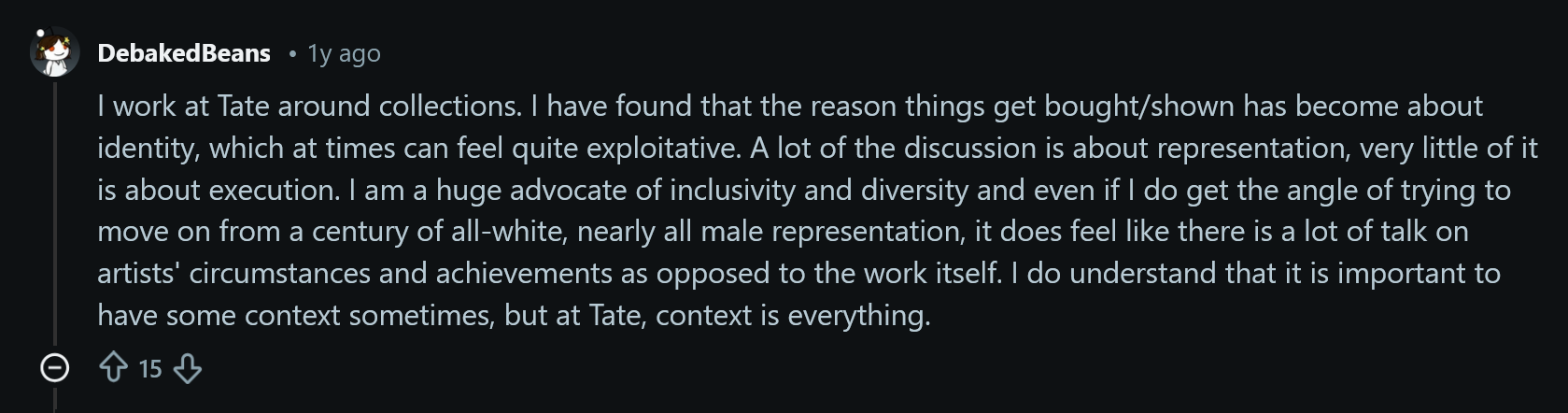
i came across this message on an online forum under the question: "Turner Prize: How much of the artwork is the artist's identity?". i found it extremely interesting to contemplate the role that the artist plays in the meaning, and value to some extent, of art. this is particularly interesting in the context of political art because the context of the artist's life often adds layers of meaning that are impossible to ignore. it would be naive to assume that an artwork exists in isolation from the experiences, struggles, or social position of its creator. contextualising a piece in this way can make it feel more immediate, more charged, more human. at the same time, there is the ‘purist’ perspective - that art should stand autonomously as an individual work. is this a valid expectation, or does it risk erasing important dimensions of understanding? these are questions that sit close to the ideas explored in art autonomy.
anyways, returning to the comment. they complain that the "reason things get bought/shown has become about identity, which at times can feel exploitative". interpreting this comment through the framework i outline above makes sense, as an artist's identity deepens the nuances and a viewer can learn to appreciate the strengths and weaknesses more. but, institutions like the Tate, or art prizes can also allow their biases and premonitions about an artist influence their decision to exhibit, award, or exclude certain works of art. and as such they play a role in the narrative that is presented to their audiences. this train of thought leads towards propaganda where institutional control of media can disseminate information and ways of thinking throughout society. and so there must be critical examination and reflection on who controls what art is shown and praised and what art is excluded from the wider public eye.
adrian robinson
last updated: december 2025