a short essay
“public arts [...] constitute one significant means of a decolonial process” 2 as they form the urban fabric within which people live and operate. to feel ‘at home’ could mean eliminating the lingering remains of colonialism. in my home country, South Africa, colonialism and decolonialism is obviously an important aspect of our history and, sometimes unfortunately, our culture. the traces of apartheid can still be felt and the urban environment in which you operate significantly contributes to this feeling. and so, “decolonising South African urban spaces is crucial”2.
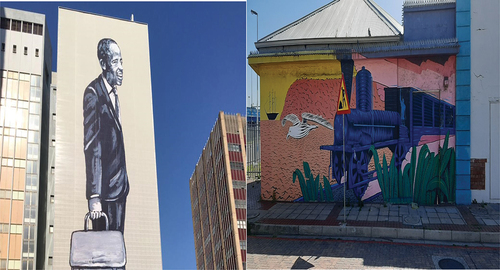
by using walls in the city of Durban as a sort of commons, the citizens of Durban are slowly reclaiming their streets as their own2. not only is this a visual regime of political resistance but also, from the perspective of a white South African man, invokes a reflection on my own sense of belonging. how am i supposed to feel at home in a place that is not mine? although uncomfortable, these are the types of thoughts that resist colonial ideas and redistributes the power structures that exist in this country.
this issue exists on the global scale, too, of course. institutions like the UN create committees to fight global issues. some of these committees consist of a few industrialised countries that will produce reports that are used to fight poverty, while those funds are simultaneously solicited from the same people whose wealth is built on systems that produce poverty1. how ironic. and so, this example in Durban shows one significant means2 of reclaiming urban environments to challenge these existing power structures that remain from colonial rulings.
the work that will unfold is years of “manifestation of political imagination”1 which aligns with the ideas of decolonialism outlined by Fanon and realised in art movements like Third Cinema.
adrian robinson
last updated: december 2025